


The Thesis:
Something fundamental is changing in American higher education, and it is not a trend. It is a structural shift. The institutions that understand it will be positioned to serve their students well. The ones that do not will spend the next decade trying to catch up.
The Architecture That Is Changing:
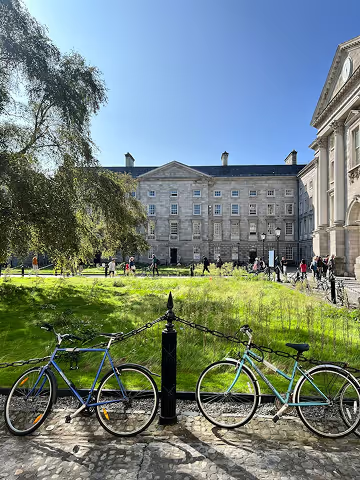
For most of the twentieth century, the design of a college education was fixed. You enrolled at an institution. You lived near it or traveled to it. You attended on a schedule set by the institution in formats that had not changed substantially since your parents were students. The credential you earned was associated with a place, a campus, a faculty, a set of buildings that represented the weight and legitimacy of the institution itself. That architecture is changing, not because technology made it possible, though technology was the mechanism, but because the population of people who need higher education has grown well beyond the demographic that architecture was designed to serve.
Key Strategic Realities:
- Who the Average Student Actually Is: The majority of students in American higher education today are working, many full time. A significant proportion are parents. Many are returning to school after years in the workforce. A substantial number are managing disabilities, chronic health conditions, or geographic realities that make a campus-centered model of education impractical or impossible. These students need a different architecture. Online education is that architecture.
- What "Built Well" Actually Means: When online higher education is constructed with rigor, it offers something the traditional model cannot match: genuine flexibility without a trade in quality. A working parent can complete coursework at midnight. A student in a rural area can access a degree program that does not exist within a hundred miles of their home. A student with a disability can engage with material designed to work with how they learn, not against it.
- The Completion Rate Problem: Online completion rates at many institutions are lower than they should be. Not because online learning is inherently inferior, but because online programs are frequently built without the student support infrastructure that residential students take for granted. The gap is a design and support gap. It is correctable.
The Evidence:
Students in rigorously constructed online programs learn as well as students in comparable face-to-face environments. This is not an optimistic projection. It is what the research consistently shows. The variable is not the medium. It is the quality of the design and the depth of the institutional commitment behind it.
The Revolution:
The college education revolution is not about replacing campuses. It is about expanding the definition of who gets to access rigorous, credential-granting, transformative higher education, and about building the infrastructure to deliver it to those students wherever they are.
The Gateway:
Center on Online Learning Solutions exists to help institutions, instructors, and individual learners navigate this shift. Explore our resources at centerononlinelearning.org.